Buying port instead of tasting it – what changes in the shop
Updated September 17, 2026 · 6 min read
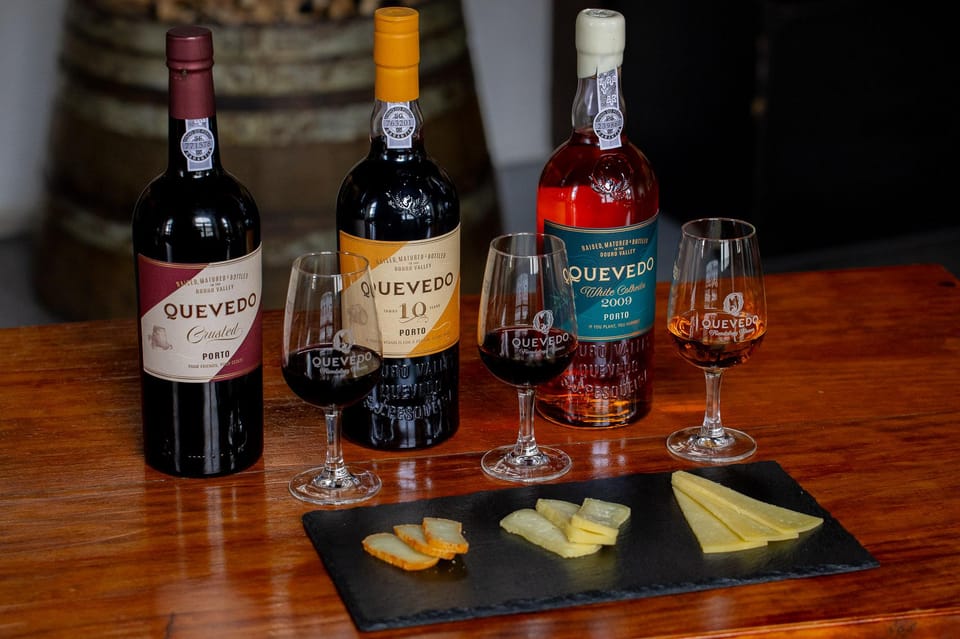
Every guide to Vila Nova de Gaia assumes you want the tour. Plenty of people don’t. They want two bottles of something they cannot get at home, and forty minutes of barrel history is the price they are being asked to pay for the privilege of finding them. It isn’t, and the shops are more interesting than their listings suggest.
The shop is open when the cellar is shut
This is the practical difference nobody advertises. A lodge shop takes no ticket and keeps its own hours, which are longer than the visiting hours. Cockburn’s stops admitting visitors at 5.30pm from April to October and 5pm from November to March, but its shop is open 9.30am to 7.30pm through the summer season. Taylor’s closes the cellar at 6.15pm while its tasting room runs until 7.30pm, and it keeps a separate store in Porto itself, open 10am to 2pm and 3pm to 7pm.
So the five o’clock problem – you got to Gaia late, the last tour has gone – is not actually a problem if buying was the point. Walk in, ask, buy, leave. It takes ten minutes.
The same goes for the reverse case: you are travelling with someone who does not drink, or with children who would rather be anywhere else. A cellar tour with children is doable but long. A shop is not.
Tasting without a tour ticket
You can also drink without buying the warehouse tour. Several houses sell flights by the glass rather than a guided visit – Kopke, on the Gaia waterfront, is built around sit-down flights rather than a cellar walk, and tasting rooms across Gaia sell three-glass sets with cheese from around €26. That is the same money as an entry-level guided visit, poured sitting down, in a room where you can go back and ask for the one you liked again.
If what you want is to decide between two tawnies before spending €40 on a bottle, that is the format that answers the question. The guided tour answers a different one.
What the shelves actually hold
Three things are worth knowing before you compare prices.
A lodge shop sells one house. Graham’s sells Graham’s. That is either the point – you have just tasted their 20-year-old and want it – or a limitation, because you cannot put two houses side by side. A garrafeira, a Portuguese wine shop, carries a dozen houses and will let you compare.
The supermarket is not the enemy. Basic ruby and standard tawny sit on shelves in every Continente and Pingo Doce in the city, at prices no lodge shop will match. If your shopping list is “a bottle of port for my father-in-law”, buy it there and spend the difference on lunch. Nobody in Gaia will tell you this.
The gap opens further up. Aged tawnies – 10, 20, 30, 40 years – single-harvest colheitas with the year on the label, and house bottlings your shop at home has never stocked are where the lodge shop earns its place. These are also the bottles a tasting is genuinely useful for, because the difference between a 10 and a 20 is not a matter of twice the quality and there is no way to know which you prefer without trying both. Our guide to tawny, ruby and vintage sets out what the words on the label commit the producer to.
One question to ask at the till, because the answer varies by house and changes the arithmetic: does the tasting fee come off a bottle if you buy one? Where it does, the €25 ticket was effectively a deposit.
The VAT refund, precisely
This is where most advice goes vague, so here are the conditions as the Portuguese tax authority states them.
You must be resident outside the EU – an EU passport holder living in Lisbon or Dublin gets nothing, and the residence, not the nationality, is what counts. The purchase must come to more than €50 excluding VAT, which at the standard 23 % rate is exactly €61.35 on the receipt, in one shop on the same day. The goods must be for personal use, in your luggage, unused, and they must leave the EU within three months of the purchase month. At the airport you validate the form at an e-Taxfree kiosk, near customs, after check-in and before you fly.
Two practical notes. The refund is the VAT, not a discount the shop is granting you, so it only exists if the shop is registered for tax-free sales – ask before you pay, not afterwards. And whether a particular refund operator handles wine at all is worth confirming at the till; the rules on which goods qualify are set out per operator and not every counter treats alcohol the same way.
British readers do qualify, because since Brexit the United Kingdom sits outside the EU – that is the group most likely to assume wrongly that it goes home empty-handed. For readers resident in the EU – German, Dutch, French, Spanish and Portuguese – the refund is not available on an EU purchase, and the price on the shelf is the price.
Getting the bottles home
Not in hand luggage. Anything over 100 ml is stopped at security. Bottles go in checked baggage, or you buy airside after the checkpoint. Port sits around 20 % alcohol, below the 24 % line above which airlines cap how much you may pack, so the volume limit that applies to spirits does not apply here – the limit is your baggage allowance and what the case survives.
The customs allowances at the other end. Arriving in the UK, the personal allowance covers 9 litres of fortified wine, which is twelve bottles – more than most people imagine and worth knowing before you ration yourself to two. Travelling to the United States, one litre per person over 21 comes in duty-free; above that you are declaring it, which is allowed but no longer free.
Pack it as if the case will be thrown. Because it will be. Wrap each bottle in clothing, in the middle of the bag, upright if you can. A broken bottle of tawny does not simply stain a suitcase.
When to skip the shop and do the tour after all
If you cannot yet name what you like, buying first is backwards. A €22 visit at Cálem gets you three glasses and a host to ask; Fonseca at €16 is cheaper but runs on an audio guide, and then there is nobody there to ask. The shop is at the end of it anyway. The whole range of formats and what each pours is in our guide to the Gaia lodges, and there are 135 wine experiences across the cellar and tasting listings if you would rather sit down with a flight than walk through a warehouse. For everything else the city offers on a half-day, the things to do in Porto listings are the broader view.