Port wine cellars in Vila Nova de Gaia – which visit is which
Updated September 17, 2026 · 6 min read
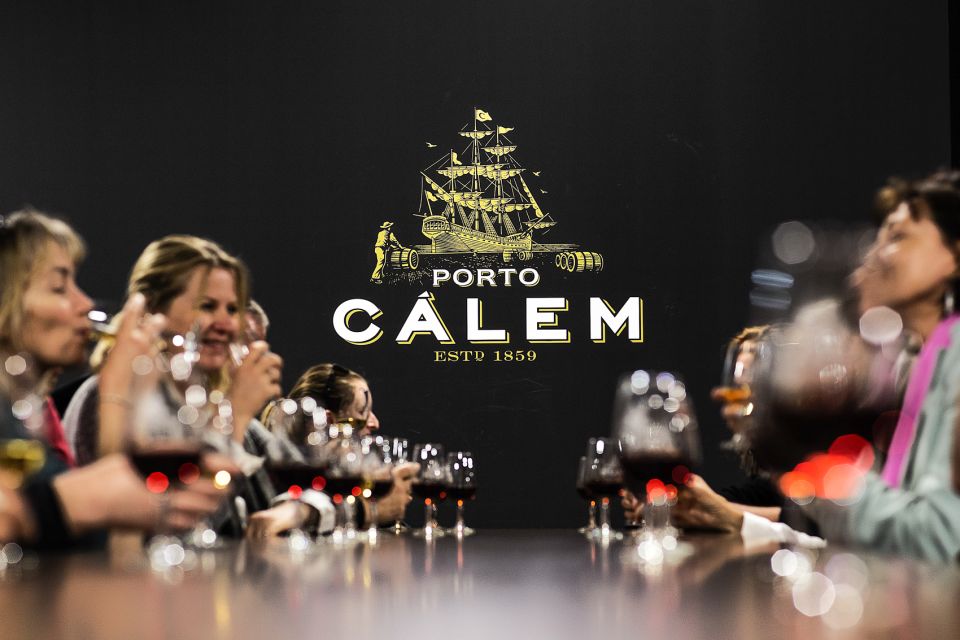
The first thing worth sorting out is the geography, because almost every listing gets it wrong on purpose. Not a single port lodge is in Porto. Cálem, Sandeman, Taylor’s, Graham’s, Cockburn’s, Fonseca, Burmester, Kopke – all of them stand in Vila Nova de Gaia, which is not a district of Porto but a separate city on the south bank of the Douro. Tours are sold as “Porto: Cálem Cellar Tour” because that is what people search for, and the meeting point is then a quarter of an hour away on the other side of a bridge.
The second thing is what you are actually walking into. A lodge is a warehouse. The vines grow roughly a hundred kilometres upriver in the Douro valley; the wine comes down to Gaia to age. That arrangement was not a tradition but a law: from 1926 until 1986, Port destined for export had to pass through the entreposto in Vila Nova de Gaia, which is why a dozen British and Portuguese shipping houses ended up stacked on the same hillside. Since that rule fell, plenty of Port is aged in the Douro instead – but the Gaia lodges kept their barrels, and that is what the ticket shows you.
Getting across the river
From Ribeira the cheapest route is on foot over the lower deck of the Ponte Dom Luís I. The crossing itself is about ten minutes on the flat, and it deposits you on the Gaia quay where Cálem, Sandeman and Ferreira are lined up along the water. That much is easy.
The houses that are not on the quay are the problem. Taylor’s, Graham’s, Fonseca and Cockburn’s sit on the slope above it, and the climb is steep enough to change the plan for anyone with a pram, a bad knee or a five-year-old. Two ways around it:
- The Teleférico de Gaia runs 562 metres from the upper deck of the bridge down to the riverside – €7 one way, €10 return, children aged 5 to 12 €3.50 and €5, a family return for two adults and two children €22.50. It operates daily from 10am, until 8pm in high summer and 6pm in winter.
- Or take a taxi up to Taylor’s and walk down afterwards. Nobody sells this as a tip, but it is the version that works after three glasses.
Guided, self-guided, or neither
The word “tour” covers three quite different products, and the price difference between them is mostly this, not the wine.
Guided in a group. A host walks you through the ageing cellar and explains the fortification, roughly 45 minutes, then a tasting. Cálem (from €22, the most-reviewed cellar visit in our listings, just ahead of Taylor’s) and Cockburn’s (from €30) work this way. Cockburn’s is the one to pick if you want to see something rather than hear about it: it holds the largest wooden cellar in the old quarter and the only working cooperage in Gaia, where coopers repair barrels in front of you Monday to Friday, 9am to 4.30pm. At the weekend, Saturday as well as Sunday, that room is empty and the point of the ticket is gone. Both houses take visitors by reservation only.
Self-guided with an audio guide. Taylor’s (from €25) and Fonseca (from €16) let you walk the cellars at your own pace and finish at the tasting bar. This is quieter, cheaper, and there is nobody to ask a question of. Fonseca is the outlier on price for a reason worth knowing – its ticket is the plainest of the big houses, and its address, Rua do Choupelo 84, is a genuine uphill walk.
Tasting only, no cellar. A number of bars and lodge tasting rooms sell flights without the warehouse attached – a simple tasting starts at €19 in our listings, three glasses with a cheese pairing at €26. If you have already seen one cellar, this is the honest version of a second visit.
What more money buys
The ladder in Gaia is unusually transparent once you know what to look at. Around €16 to €25 gets you the cellar and two or three young wines – typically a white, a ruby and a basic tawny. Around €28 to €40 adds either a pairing (Graham’s premium tasting comes with chocolate, cheese and a pastel de nata) or an event: Cálem’s fado version at €28 puts a live singer and guitarist in the cellar after the tour, which is the single most reliable way to keep teenagers interested.
Above that you are paying for the glass, not the room. Graham’s tasting in the Vintage Room starts at €70, and the wines there are aged tawnies and vintages that would cost most of that by the bottle. It is not a beginner’s ticket, and the house asks for a booking in advance rather than taking walk-ins.
One thing no listing spells out: the tasting is poured at the end, at a bar, standing up, in about fifteen minutes. If you were imagining a long sit-down, book a tasting room rather than a cellar tour.
When to skip it altogether
Three honest cases.
If you have one afternoon and you want the river, take a six-bridges cruise instead – fifty minutes, roughly the same money, and you see the lodges from the water. If you are going to spend a day upriver anyway, the wineries on a Douro valley trip pour more wine and show you the vines the Gaia barrels came from; doing both in one short stay is repetition, not depth. And if the appeal is the building rather than the drink, Porto has better ones on its own side of the river, and the entrance tickets cost a third as much.
Practicalities that actually matter
The cellars are held at ageing temperature all year, around 16 °C. In August this is a relief for ten minutes and cold after forty – take a layer, and do not plan the visit as your one indoor stop of a rainy day, because the walk between houses is outdoors and steep.
Portugal set a single legal drinking age of 18 for all alcohol in 2015, so under-18s are not served in a tasting. Every major house does admit them, and most pour Douro grape juice instead; Fonseca prices children aged 5 to 14 at €8 and serves the juice in a Port glass so they can join the toast.
Book the guided slots ahead in summer. Cálem, Cockburn’s and Graham’s all sell timed entry in a named language, which is the part that sells out rather than the day itself; Graham’s and Cockburn’s take visits by appointment only. If a midday slot in your language has gone, the first tour of the morning is usually still open. A guided city walk that ends in Gaia solves the booking and the bridge in one go, and there are 135 wine experiences in the city’s cellar and tasting listings to compare once you know which of the three formats you are after.